
Oct 24, 2026 · Research · 3 min
Texas energization holds and proposed transmission billing
ERCOT’s August report identified 17 projects awaiting energization approval. A separate proposal would begin transmission billing when capacity becomes available.
- 6,608 MWfive-year planned peak of 17 projects in ERCOT’s August snapshot1
- $630Ka month in transmission charges per 100 MW billed at the 2026 statewide rate, our arithmetic2
- 20 yearsminimum term of the proposed transmission bill3
- Dec 10the audit report is due4
On August 20, ERCOT, the Texas grid operator, reported that 17 data center and crypto projects had completed its processes except approval to energize. Their total planned peak demand over five years was 6,608 megawatts. ERCOT had paused approvals for these large loads pending verification; its September update also tied the pause to the community impact review.1,5
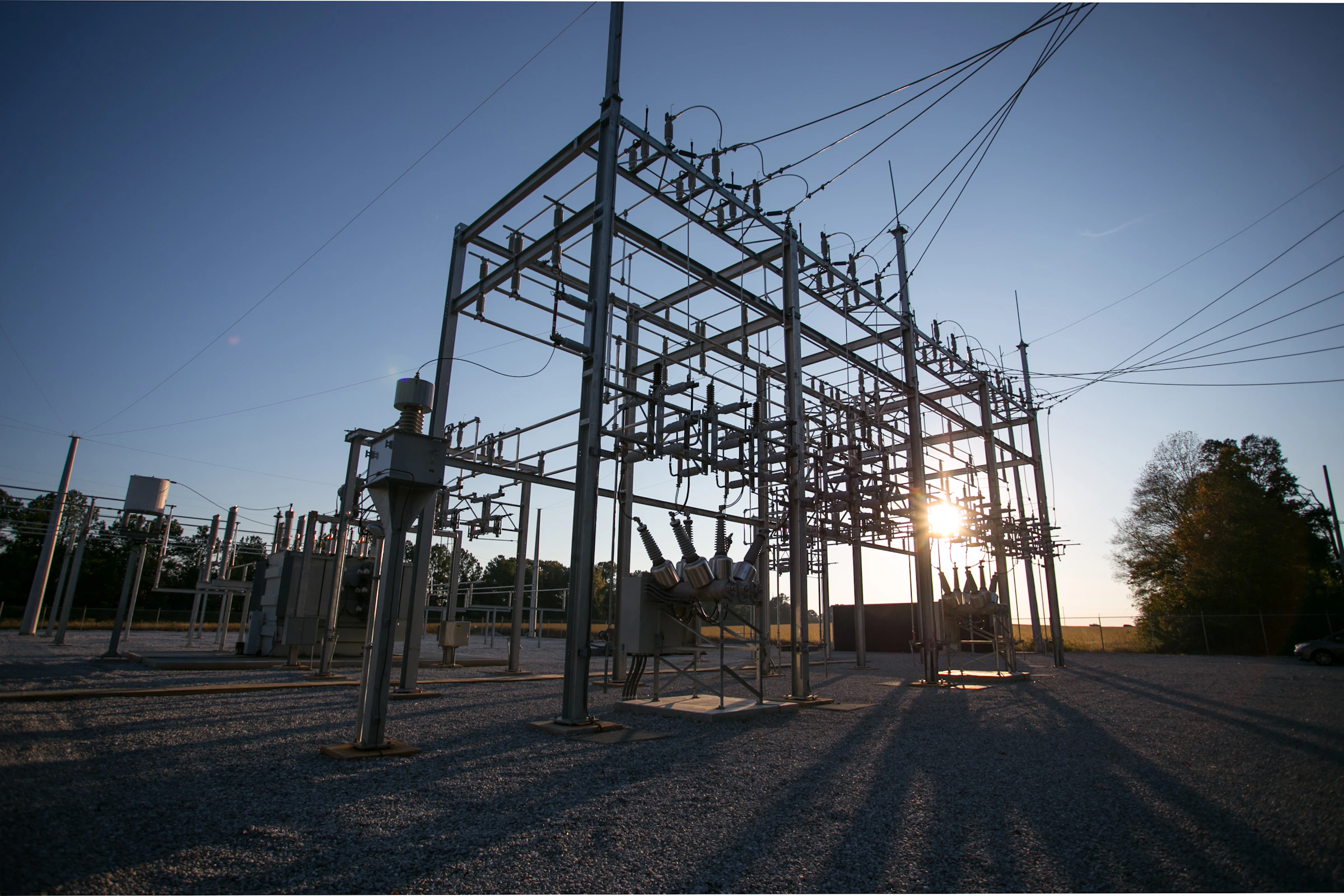
On July 17 the state’s utility commission chairman told the governor that large users would “begin paying transmission charges as soon as capacity becomes available, even if they have not energized.”6 The commission’s proposed rule says the same: the bill starts once the lines to serve a project are ready, and runs at least 20 years.3 Its billing terms make no exception for a project the state is holding back.7 Staff’s September roadmap planned a recommended adoption order for a December open meeting. That is a planned regulatory step, not a guaranteed adoption date.8

The hold
The grid operator is the Electric Reliability Council of Texas, or ERCOT, which manages the power for more than 27 million Texas customers.9 It calls any user of 75 megawatts or more a large load.5 On August 3, 17 days after the chairman’s letter, Governor Greg Abbott directed ERCOT to verify data center projects before moving them forward.10 ERCOT then paused approvals for large data centers and crypto facilities; other large loads can still be approved.1 On September 21 he also had the state’s environmental agency pause permits for infrastructure directly supporting data centers.11,12
The audit is part of Batch Zero, ERCOT’s one-time study of the large loads waiting to connect.13 ERCOT’s timeline gives a report date, December 10, but no date for approvals to resume.4 The August slide describes the potential impact through the end of 2026. It does not identify the 17 projects or establish their current status or whether transmission capacity is available.1
The bill
The Public Utility Commission of Texas, or PUCT, proposed the terms in July. A large load that has not switched on when billing starts pays on its contracted peak, the most power its agreement provides for, until it does. Payments run 240 months, over 20 years.14 The proposal defines a large load customer by reference to §25.194. That adopted rule generally covers requests for at least 75 megawatts at one site, subject to its applicability and transition provisions. The August project count alone does not establish how the proposed billing terms would apply to each project.15,16
The PUCT staff’s 2026 rate matrix puts the statewide transmission rate at $75.53 per kilowatt a year, about $630,000 a month for every 100 megawatts. If all 6,608 planned megawatts were billed at once, that would be about $42 million a month, or $500 million a year. The same filed matrix reports $6.06 billion of transmission cost of service.2 The proposal would also change how the rate is set, so read these as a scale, not a quote.3
The comment record includes requests to align billing with available capacity and delays outside a customer’s control.17 Two filings illustrate the issue. STACK Infrastructure would let billing start later when “energization is prevented by force majeure or by circumstances outside the customer’s control.”18 The Data Center Coalition asks that a load not be “billed for capacity it has not actually been made able to use.”19

What to watch
- November 1: the prerequisite date in ERCOT’s August quarterly stability assessment schedule. That presentation associated this assessment with projected second-quarter 2027 energization; inclusion does not confer approval to energize.21
- December 10: ERCOT’s audit and community impact reports. Projects that fail the audit are dropped.4,22
- December 17: a scheduled PUCT open meeting after the report. Its date does not establish an agenda or a decision on the pause.4
- December, date not set: staff’s planned billing-rule recommendation. Adoption, the final terms and project-specific applicability remain separate questions.7,8
Reviewed October 26, 2026. Project counts remain an August snapshot; billing terms remain proposed. This revision narrows the applicability and schedule claims and replaces an exhaustive comment-record claim with the two cited filings. Original publication date retained.1,3,8 Pallara represents no applicant. Not legal advice.
Receipts
Every fact above, with the document it came from. A rule not yet adopted is marked proposed.
-
1
ERCOT paused approvals to energize large load data centers and crypto facilities until Batch Zero eligibility verification is complete; it may approve non-data center large loads; data center and crypto large load impact through end of 2026: 17 large loads (6,608 MW total peak demand over five years) that have finished all ERCOT processes except approval to energize; the slide gives counts, not project names or facility status
-
2
The filed Final Matrix B Parameters sheet reports $75.527 per kW annually (F117), $6.06 billion TCOS (D116), and 80,874 MW average 4CP (G116); the rate is the matrix’s reported sum, not a simple quotient of these totals; by our arithmetic, 100,000 kW x $75.527 / 12 = $629,000 a month, and 6,608,000 kW x $75.527 / 12 = $41.6 million a month, $499 million a year, 8 percent of the $6.06 billion total
-
3
Proposed: a large load customer's billing must commence at the level of available service at the time it is available, irrespective of whether the large load customer has energized or is fully using available capacity, and for a period of no less than 20 years; the proposal also replaces the 4CP method with 12CP for assigning transmission costs
-
4
ERCOT sends requests for information to confirm each developer satisfies the criteria for its eligibility path, and conducts site verifications of certain loads; loads that do not pass verification, or do not respond, will be disqualified from Batch Zero; ERCOT files its eligibility verification report December 10; Commission open meeting December 17
-
5
Large loads are 75 MW or greater; large loads not yet connected must meet eligibility verification to move forward; ERCOT paused approvals to energize data centers and crypto facilities of 75 MW or greater until completion of the verification and audit and the community impact review
-
6
Chairman Thomas Gleeson to Governor Abbott, answering the Governor's June 10 letter: the PUCT is "requiring large consumers of electricity to pay upfront the direct costs to interconnect their facilities and begin paying transmission charges as soon as capacity becomes available, even if they have not energized"; the PUCT expects a final decision in December 2026
-
7
The proposed billing terms, §25.193(d) and §25.252(e), contain no exception to the start of billing for a load that is not allowed to energize (full text read October 24, 2026)
-
8
Commission staff are synthesizing 909 pages of comments and will present a recommended adoption order for Project 58000 at an open meeting in December 2026
-
9
ERCOT manages the flow of electric power to more than 27 million Texas customers, about 90 percent of the state's electric load
-
10
ERCOT received Governor Abbott's August 3 letter directing a verification process before advancing data center large loads, and would not issue Batch Zero classifications by August 7
-
11
The Governor directed TCEQ to halt all permits sought by data centers until ERCOT completes its audit
-
12
TCEQ has paused the issuance of all permits related to the construction or development of infrastructure directly supporting data centers
-
13
Batch Zero is ERCOT's one-time transitional study of the reliability impacts of large loads that seek to interconnect and meet certain eligibility criteria
-
14
Proposed tariff terms: billing commences the first billing cycle after transmission capacity is made available to serve the large load customer; a large load customer that does not energize when billing commences is billed on its contracted peak demand until it energizes; 240 consecutive payments over the first 20 years
-
15
Proposed: a large load customer is an entity that is subject to §25.194 (Large Load Interconnection Standards)
-
16
Section 25.194 contains applicability and transition provisions; the adopted study fee is $100,000, and SLLIA security is the greater of $50,000/MW of contracted peak demand or allocated system-upgrade costs. The agreement deadline runs from ERCOT’s capacity-allocation notice, not merely a study report
-
17
Project 58000 contains stakeholder comments on minimum billing demand and capacity availability; STACK Item 39 and Data Center Coalition Item 38 are the specific filings compared here, without asserting an exhaustive absence of other requests
-
18
STACK Infrastructure: minimum billing obligations should commence at the level of transmission service made available; "Delays should be permitted when energization is prevented by force majeure or by circumstances outside the customer's control"; the filing does not mention the energization pause, the Governor's directive or Batch Zero verification
-
19
Data Center Coalition: where a utility fails to make capacity available on schedule or delivery is delayed by force majeure, the minimum billing demand should be adjusted "so that a large load customer is not billed for capacity it has not actually been made able to use"; the filing does not mention the energization pause, the Governor's directive or Batch Zero verification
-
20
Each investor-owned distribution utility must submit a compliance filing to update its tariff within 30 days of adoption
-
21
A large load must be in the applicable quarterly stability assessment before it can energize; assessments run on a fixed calendar with prerequisite deadlines of August 1, November 1, February 1 and May 1; loads in the November 1 assessment are projected to energize in the second quarter of 2027
-
22
As part of its response to the Governor's directive, ERCOT requests information on the impact of data center and crypto loads on their communities and files the Community Impact Review Report with the Commission by December 10, 2026